The Art of the Holiday Bake: Why You Need a Walnut Kneading Board
There's a particular kind of magic that happens in December kitchens. The scent of vanilla and butter. Flour dusting the air like soft snow. Cookie cutters scattered across the counter, each one holding the promise of a memory in the making.
But here's what no one talks about: the mess is the hardest part.
Not the recipe. Not the timing. The flour that creeps into every crevice of your kitchen island. The dough that sticks to granite. The countertop that's never quite clean enough to feel good about rolling out another batch.
What if the solution wasn't cleaning better—but choosing better?
Why Wood Beats Stone Every Time
If you've been rolling dough on marble or granite, you've likely noticed something frustrating. Marble is beautiful, but it's too cold. That chill can seize up butter in your dough before you've even finished rolling, leaving you with cracked edges and uneven cookies.
Granite has the opposite problem. It holds heat from your hands, your kitchen, and the oven nearby. Too much heat means sticky dough and a frustrating bake.
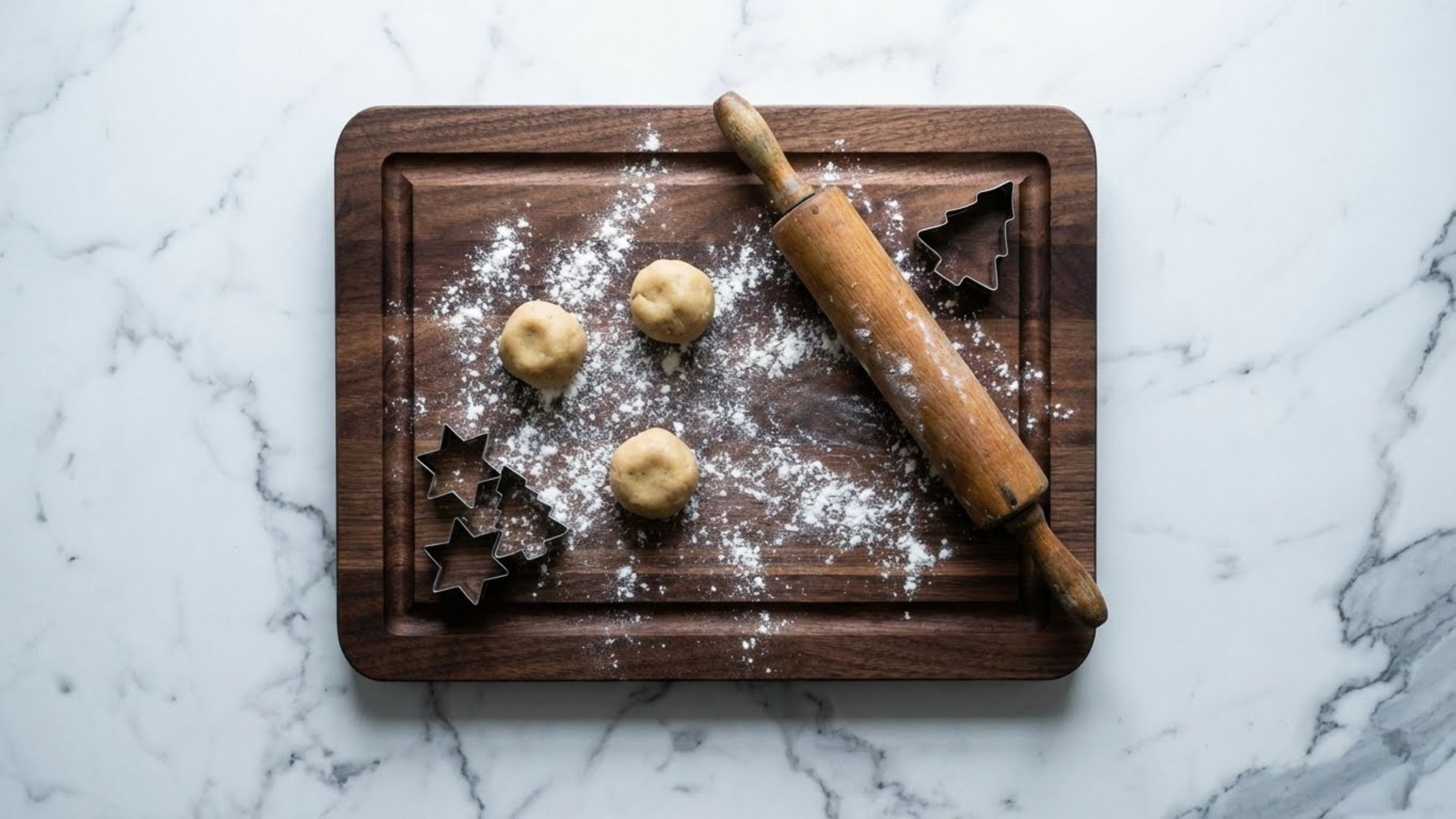
Walnut is different. It's temperature-neutral. It doesn't pull heat from your dough or add warmth where you don't want it. It just... works. The grain is tight enough to stay smooth under a rolling pin, yet gentle enough not to damage delicate dough.
And if you've ever tried to knead pie crust on a cold stone surface, you know: wood feels better under your hands. Please take a look at the Walnut Collection to see the difference yourself.
The Weight That Works for You
Here's the thing about a solid Walnut cutting board used as a baking board: it doesn't move.
Not because it's clamped or glued down. Not because you're wrestling with it while your hands are covered in flour. It stays put because walnut is dense, heavy, and grounding, the way good kitchen tools should be.
When you're leaning into dough—really kneading it, working it, rolling it flat—you need a surface that doesn't shift. A large walnut board gives you that stability without any fuss. No sliding. No adjusting. Just steady, dependable work space that lets you focus on the cookies, not the tools.
The Handles That Change Everything
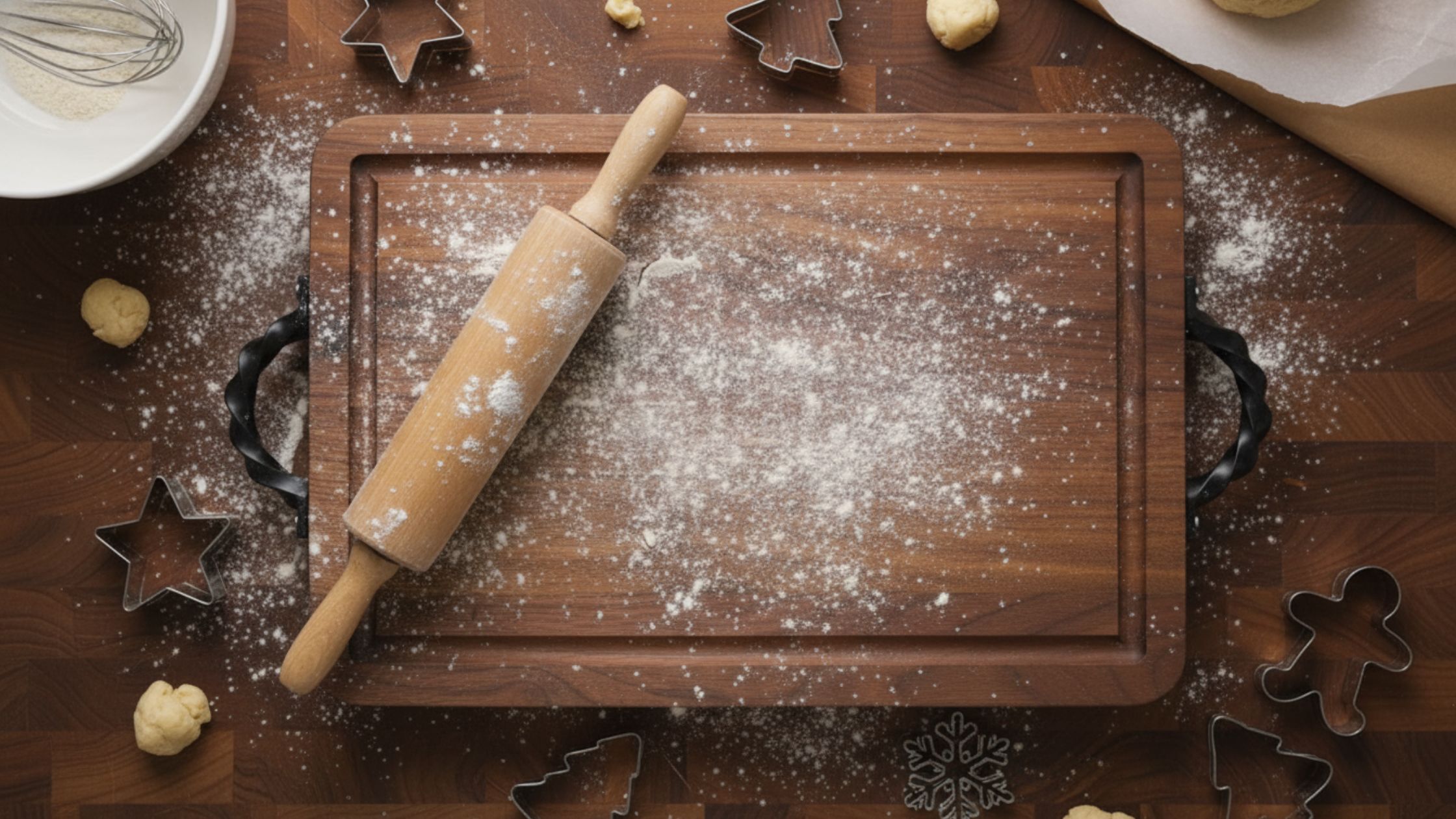
See those cast iron handles? They're not just decorative.
Imagine this: You've rolled out three dozen cookies, and they're staged across your board, ready for the oven. But you need your counter back for the next batch. Instead of awkwardly scooting cookies onto a baking sheet one by one, you simply lift the whole board and move it.
The handles give you control. You can shift your prep station without disturbing your work. You can carry the board to the oven, to the cooling rack, or out of the way when someone else needs the counter.
It's one of those small design details that feels extravagant—until you use it once, and then you can't imagine baking without it.
The Cleanup You'll Actually Want to Do
Let's be honest: holiday baking is joyful until the cleanup starts.
But here's where Walnut earns its place. Flour doesn't stick to oiled wood the way it clings to stone or laminate. You scrape it off with a bench scraper or the edge of a spatula, and it lifts cleanly. One wipe with a damp cloth. A quick dry. A light coat of food-safe oil if you're feeling thorough.
Compare that to wiping down an entire island, digging flour out of grout lines, or scrubbing your granite until it finally looks clean again.
The Walnut board contains the mess. It becomes your designated baking zone. When you're done, you clean one surface instead of half your kitchen.
The Board That Heals Itself
Walnut has a quiet resilience. Those little indentations from cookie cutters? The light scratches from a pastry wheel? They soften over time as the wood's natural oils fill them in.
A quick wipe after each baking session and a thin layer of mineral oil or board cream every few weeks is all it needs. Walnut doesn't demand perfection. It just asks you to care for it the way you'd care for any cherished kitchen tool—with a bit of attention and a lot of use.
Over time, your board develops a patina. It becomes softer, richer, more yours. It's the kind of piece that your kids will remember. The one that shows up in the background of every Christmas cookie photo.
Bake Memories, Not a Mess
Holiday baking should feel like a gift you give yourself—not another task on an overwhelming list.
The right tools don't make the work easier. They make it feel intentional. Like you're building something that matters, one rolled-out batch of sugar cookies at a time.
A Walnut cutting board used as a baking board won't fix a burnt batch or remind you to set a timer. But it will give you a place to work that feels steady, beautiful, and completely yours. A surface that holds the flour, supports the dough, and quietly makes everything just a little bit better.
Here's to a season of baking that feels as good as it tastes.
Warmly,
Gavron Campbell
BigWood Boards